Mitteilungen zur Christlichen Archäologie 15, 2009
€15.00
% €30.00 (50% saved)
Available, delivery time: 1-3 days
"Mitteilungen zur Christlichen Archäologie 15, 2009"
Mitteilungen zur Christlichen Archäologie 15, 2009
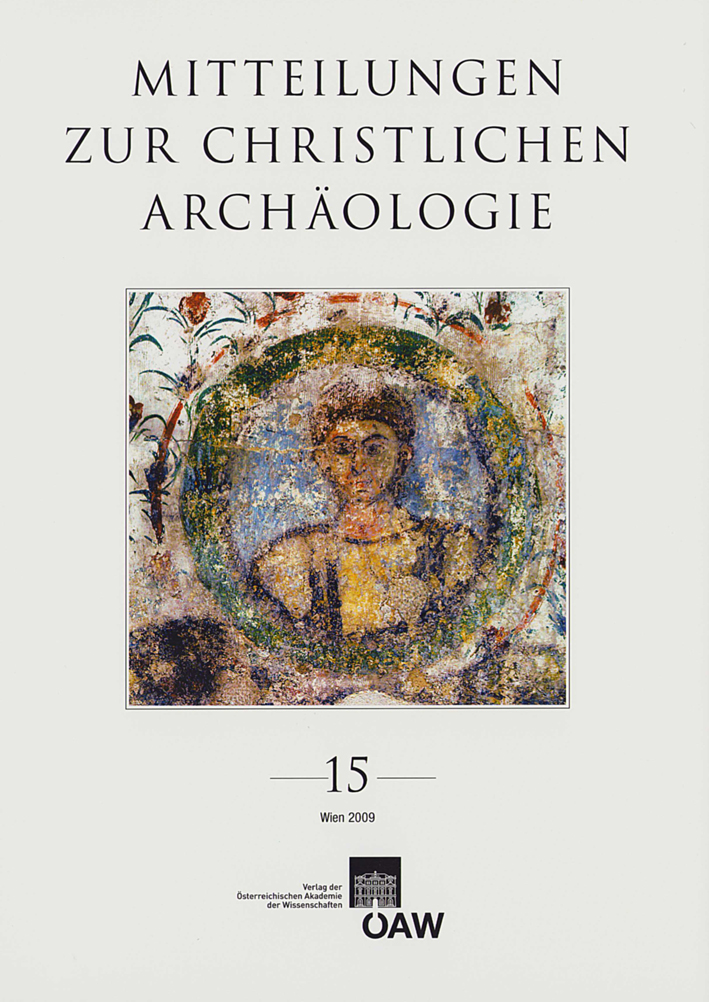
Wien 2009
112 S., zahlr. SW-Abb. u. Pläne im Text; 29,7 x 21 cm; broschiert
0 of 0 reviews
Average rating of 0 out of 5 stars
Login
Numismatik
David Jeselsohn – Aram R. Vardanyan, The Jeselsohn Collection of Coins of the Holy Land. Volume IV: Islamic And Crusader CoinageJerusalem 2022ISBN 978-965-217-454-3IX, 317 S./pp., zahlr. Farb- und S/W-Abb./num. colour and b/w-figs., 28 x 21 cm; kartoniert/hardcoverThis book is based on a collection of more than seven hundred gold, silver and bronze coins struck in the mints of Jund Filastin and Jund al-Urdunn (al-Ramla, Filastin, Tabariya, 'Akka, 'Asqalan, Yubna, Saffuriya, Jarash, Baysan, Iliya, Ghazza, al-Quds, Nablus, al-Urdunn, Bostra etc.) from early Islamic period (Umayyads) until 13th century (Crusaders). The book includes both historic and numismatic discussions for each chapter, as well as catalogue with colored illustrations of some 746 coins including lots of rare and unpublished pieces.
Ivan Varbanov, Roman Coins and their prices realized. I. Roman Republican Coins. Volumes I & II vol. I: Chronology of the Roman Republican Coinage. Catalogue: Gold coinage. Silver coinage – Part Onevol. II: Catalogue: Silver coinage – Part Two. Bronze coinage. IndexesBurgas 2025vol. I: ISBN 978-619-93185-0-8vol. II: ISBN 978-619-93185-1-5vol. I: 808 S./pp., Illustrationen/figures; kartoniert / hardcovervol. II: 756 S./pp., Illustrationen/figures; kartoniert / hardcoverThere is much magic, beauty, and challenge in numismatics, but the Roman coinage remains my one and only undisputed favorite. For more than 50 years, I have been collecting valuable information and I can confidently say that I have gathered the largest database of Roman coins, with facts about millions of pieces, currently available in private collections or expositions and archives of museums, with essential details on tens of thousands of auctions, eBay sales, and many other sources. I was fortunate to have collected this database during a time when, thanks to the rapidly developing metal detecting methods and technologies, many coins and troves were found around the world, as if trying to fill the gaps in the great puzzle of Roman Republican, Imperatorial, and Imperial coinage, thus providing a more complete picture of Roman coins and mint craft. To begin with, I published a few books on Greek Imperial and Roman Provincial Coinage, such as the three volumes of “Greek Imperial Coinage”, covering the provincial coinage at the mints on the Balkan Peninsula, as well as the two volumes of “The Coinage of Philippopolis”, covering the complete mintcraft in this ancient city. However, the main part of my database consists of coins issued at the central Roman mints. As the process of identification and classification recently became almost unmanageable due to the vast number of Roman coins discovered so far, I decided to publish the already available information in catalogs, initially focusing on the Roman Republican coinage. This work aims to examine the Roman Republican coinage, covering the period from the irregularly shaped pieces of bronze known as Aes Rude (a.k.a. Aes Infectum or Imperfectum) to the period 8th – 3rd century BC and the beginning of Roman Imperatorial coinage (it will be considered in a separate volume), roughly around 49 BC. The purpose of this catalogue does not lie in providing a complete analysis of all aspects of the Republican coinage. In his work “Roman Republican coinage”, Michael H. Crawford dwells in detail on this topic and needs not be repeated. The current book simply aims to summarize the data already presented by the prominent scholars М. Crawford, А. Banti, L. Simonetti, E. Sydenham, E. Babelon, and all those who have contributed to the study and systematization of the Roman Republican coinage. The book also supplements the existing research by presenting many new coins that lack any previous description, together with their unpublished variants. It also covers a good number of hitherto unknown inscriptions, control marks, symbols, letters, or digits discovered after the publication of the fundamental works by the authors mentioned above. Apart from the main coin types, the classification presented herein describes all available varieties, including those absent in Crawford’s research, each marked with a separate number. All hybrid Republican coins for which I have found sufficient information are analyzed as well. A complete description of the coins issued by the mints during The Social War – the so-called denarii of the Marsic Confederation – is also added in this catalog. A fundamental principle I try to follow in my work is to compose each book in a manner that I would personally expect to see for any such data arranged in a catalog. My presentation also follows the requirements and recommendations gathered through discussions with colleagues and collectors from all over the world. Hence, the key principle of this catalog is to facilitate quick identification of any already acquired coins or, alternatively, provide complete data on items one might wish to acquire. Therefore, all the presented coins are arranged based on the metal they are made of, i.e., in the following sequence: gold, silver, bronze. Coins made of the same metal are further classified by their years of issue, as well as by their denominations. The design of a coin type is displayed in a photo adjacent to its description. Photos are provided on a 1:1 scale, apart from a few exceptions, where the scale is stated at the base. The year of issue is followed by the average value based on the weight of all coins of a specific variety. Since weight may vary within a wider range for some of the bronze items presented, the minimum, average, and maximum weight of the specimen is also provided. After a detailed description of the obverse and reverse for a given coin, all references for the same are duly listed, followed by the number of specimens used. Below each description, you will also find information about the specific prices at which the coin was sold, depending on its quality. Different prices are given for the different quality types: F (fine), VF (very fine), EF (extra fine), and MS (mint state). Furthermore, each quality type is featured with the minimum, average, and maximum price (min/avg/max) at which the coin was previously sold. All prices are in euros or have been converted to euros based on the exchange rate on the date the coin was sold, if it was originally sold in another currency. A detailed Appendix is enclosed at the end of this catalog, specifying all inscriptions, control marks, digits, or symbols visible on any Republican coins. After each of these marks, you will find listed the pages where the same symbol appears. For faster and easier identification, the Crawford numbering is included in the beginning of the Appendix, along with the corresponding numbering as per this catalog.
Haim Gitler – Mati Johananoff – Oren Tal, A Corpus of Samarian Coinage from the Persian Period, Volumes I & II (Numismatic Studies and Researches [NSR] XIII and XIV) Jerusalem 2025ISBN 978-965-7849-41-5vol. I [= NSR, vol. XIII]: 254 S./pp., Illustrationen/figures vol. II [= NSR, vol. XIV]: 340 S./pp., Illustrationen/figuresThis two-volume monograph, A Corpus of Samarian Coinage, is the definitive culmination of a major research program focused on the Samarian minting authority during the Persian period. This coinage represents one of the earliest and most varied official coinages produced in the southern Levant, likely being issued from the late fifth century BCE until after the Greco-Macedonian conquest. While building on earlier scholarship, this work offers a substantive re-evaluation of the field. It incorporates numerous newly identified coin types and establishes a robust, modern classification system essential for all future study. The data is based on an exhaustive, multi-year study of the entire corpus of known Samarian issues, involving the global examination of specimens in publications and in public and private collections.
Yoav Farhi, The City of Gaza in the Roman Period. The Numismatic Evidence: First Century BCE–Third Century CE (Corpus Nummorum Palaestinensium VI)Jerusalem 2025ISBN 978-965-7849-39-2XVI + 484 S./pp., zahlr. Farb- und S/W-Abb./num. colour and b/w-figs., 28 x 21 cm; kartoniert/hardcoverThis book is a comprehensive discussion examining the production and significance of the coinage struck by the city of Gaza under Roman rule from the conquest of this region by Pompey (64/3 BCE) to the end of the municipal minting in the second quarter of the third century (241/2 CE). The data presented are based on the study of some 4494 bronze and silver coins minted in Gaza during the Roman period. As many specimens as possible were located during some 20 years of a through and wide search, at various publications and in public and private collections especially in the Middle East, Europe and the USA. The catalogue presents 318 types with hundreds of variants and the photographs of 833 coins. This is the first time that such comprehensive research has been conducted regarding a polis in Roman Palestine with a vast volume of minting as in the case of Gaza. This research, which examines the coinage of the largest and most important city in southern Roman Palestine, contributes not only to a better understanding of the city itself, but also can offer new perspectives on the broad subject of city coins of the Roman period, and especially those of this region.
Haim Gitler – Catharine Lorber – Jean-Philippe Fontanille, The Yehud Coinage. A Study and Die Classification of the Provincial Silver Coinage of Judah (Numismatic Studies and Researches [NSR] XII)Jerusalem 2023ISBN 978-965-598-229-9XI, 544 S./pp., zahlr. Farb- und S/W-Abb./num. colour and b/w-figs., 28 x 21 cm; kartoniert/hardcoverThis volume presents a die study of the provincial silver coinage of Judah in the late Persian, Macedonian, and early Hellenistic periods. It offers correct descriptions of the coins, their designs, and their inscriptions; enumerates the obverse and reverse dies identified for each of the 44 recorded types; and explains the probable sequence of the issues as deduced from iconographic associations and die links. The iconography of the coin types is examined in depth, with comparisons to motifs in Greek, Persian, and ancient Near Eastern art, including other local coinages and sources in Judahite material culture. The monograph also analyzes data relating to the metrology, metal content, and circulation of the coinage. Overall, the study attempts to place the Yehud coinage in its historical context and to define its role in the economy of the ancient province of Judah.
Haim Gitler – David Jeselsohn – Mati Johananoff – Oren Tal, The Jeselsohn Collection of Coins of the Holy Land. Volume I: Hacksilber, Persian and Early Hellenistic CoinageJerusalem 2024ISBN 978-965-217-465-9IX + 434 S./pp., zahlr. Farb- und S/W-Abb./num. colour and b/w-figs., 28 x 21 cm; kartoniert/hardcoverThe book contains a catalogue of the largest collection of early coinages minted locally in the southern Levant during the fifth-fourth centuries BCE. The two centuries of Achaemenid dominion in the Near East, from 538 until 332 BCE, constitute a crucial period in the history of the southern part of the Fifth Persian Satrapy, also known as “Beyond the River” (‘Abar Naharâ). This period is marked by a profound transformation in the economic, political and cultural life of the region. From the mid-fifth century BCE we witness a transition in the means of payment from the use of weighed metal (mostly silver) to that of foreign coinage, and, subsequently, to local issues. The issuing of local coins by civic minting authorities should be seen as a part of a longer process of monetization by which the use of precious metals in various shapes for economic transactions was transformed into the use of coins for such transactions in the southern Levant. The current volume, covers the Persian and Early Hellenistic Coinage, i.e. from the Persian (Achaemenid) and early Hellenistic (Ptolemaic and Seleucid) periods, roughly 450 to 250 BCE, as well as three Hacksilber and jewelry hoards and varia. This includes the coinage of Philistia, Samaria, Judah and possibly Dor and Edom.
Hasan Uğuz,Konya Müzesi Geç Roma SikkeleriIstanbul 2026ISBN 978-625-396-834-2272 S./pp.; zahlr. Farb- und S/W-Abb./num. colour and b/w-figs., 28 x 21 cm; broschiert/softcover
Boglárka Weisz – István Kádas – Judit Gál (eds.),Markets, Mints, and Merchants. Royal Economic Policy and Towns in Medieval HungaryBudapest 2025ISBN 978-963-416-513-2440 S./pp.; zahlr. Farb- und S/W-Abb./num. colour and b/w-figs., 29,7 x 21 cm; kartoniert/hardcover
Mehmet Kayhan Murat,Bandırma Müzesi Geç Roma Sikkeleri Istanbul 2025ISBN 978-625-6212-47-3103 S./pp., zahlr. S/W-Abb./num. b/w-figs., 29,7 x 21 cm; broschiert/softcoverDiese Studie über Münzen der Spätantike im Museum von Bandırma umfasst insgesamt 389 Münzen der Spätantike aus dem Museum von Bandırma. Die untersuchten Münzen leisten einen wichtigen Beitrag zum Verständnis des Münzumlaufs und der Prägenetze dieser Epoche. İÇİNDEKİLER Önsöz Bibliyografya BİRİNCİ BÖLÜM Roma Dönemi’nde Sikke ve Darphane Gelişimi Roma Dönemi’nde Sikke Roma Darphaneleri İKİNCİ BÖLÜM İmparatorlar, İmparatoriçeler, Tanrılar, Tanrıçalar ile Soyut ve Somut Kişileştirmeler İmparatorların ve İmparatoriçelerin Kısa Biyografileri Tanrılar, Tanrıçalar ile Soyut ve Somut Kişileştirmeler ÜÇÜNCÜ BÖLÜM Katalog DÖRDÜNCÜ BÖLÜM Değerlendirme Genel Değerlendirme Sikkeler Üzerindeki Ön Yüz ve Arka Yüz Lejandları Konkordans Cetveli EKLER Ek I: Roma İmparatorluğu Kronolojisi Ek II: Katalogda Yer Alan Sikkelerin Darphanelerini Gösteren Harita LEVHALAR
Jiří Militký, Sylloge Nummorum Graecorum. Czech Republic. Volume I. The National Museum, Prague. Part 8. Ptolemaic Empire, Egypt and North AfricaPrague 2025ISBN 978-80-7036-876-3272 S./pp., zahlr. Farb- und S/W-Abb./num. colour and b/w-figs., 29,7 x 21 cm; kartoniert/hardcover
Adnan Busuladžić,The Splendour of Ancient Greece. Pottery, Painted Vases, Sculpture, Arms and Armour, Jewellery, Glass, Coins from the Museum Collections of Bosnia and Herzegovina / Sjaj antičkih Grka. Keramičke Posude, Slikane Vaze, Skulpture, Oružje, Nakit, Staklo, Numizmatika iz Muzejskih Zbirki u Bosni i HercegoviniSarajevo 2020ISBN 978-9958-502-27-9388 S./pp., 171 S/W-Taf. / b/w-pls., 27,5 x 24 cm; kartoniert/hardcoverzweisprachig bosnisch - englischbilingual bosnian - english
N. Eda Akyürek Şahin – Roman Jacobek – Fatih Onur – Diether Schürr (Hrsg./eds.),Von Damaskus bis Rom. Wilhelm Müseler, Gesammelte Schriften.(Gephyra Monographs 7)Wien 2025ISBN 978-3-85161-320-9722 S./pp., zahlr. S/W-Abb. / num. b/w-figs., 29,7 x 21 cm; kartoniert / hardcoverDer Band "Von Damaskus bis Rom" versammelt 25 Beiträge des Numismatikres Wilhelm Müseler in deutscher und englischer Sprache, die in den Jahren 1990 bis 2025 erschienen sind sowie einen bislang unpublizierten Aufsatz.The volume “From Damascus to Rome” brings together 25 articles by numismatist Wilhelm Müseler in German and English, published between 1990 and 2025, as well as a previously unpublished essay.
Reyhan Gül Acar, Akşehir Müzesindeki Anadolu Selçuklu SikkeleriIstanbul 2025ISBN 978-625-5940-65-0166 S./pp., zahlr. S/W-Abb./num. b/w-figs., 24 x 16 cm; broschiert/paperback
Tomislav Bilić,Late Iron-Age Coins at the Archaeological Museum in Zagreb. A study of the 'Celtic' Coinage from Southern Pannonia / Mlađeželjeznodobne kovanice iz Arheološkog muzeja u Zagrebu. „Keltski“ novac južne Panonije(Musei Archaeologici Zagrabiensis. Catalogi et Monographiae / Arheološkog muzeja u Zagrebu. Katalozi i monografije / Archaeological Museum in Zagreb. Catalogues and Monographs volumen / svezak / volume XXI)Zagreb 2024ISBN 978-953-8143-61-8ISBN 978-953-6335-26-8355 S./pp., zahlr. Farb- u. SW-Abb./num. colour and b/w-figs., 29,7 x 23 cm; kartoniert/hardcoverzweisprachig kroatisch - englischbilingual croatian - english
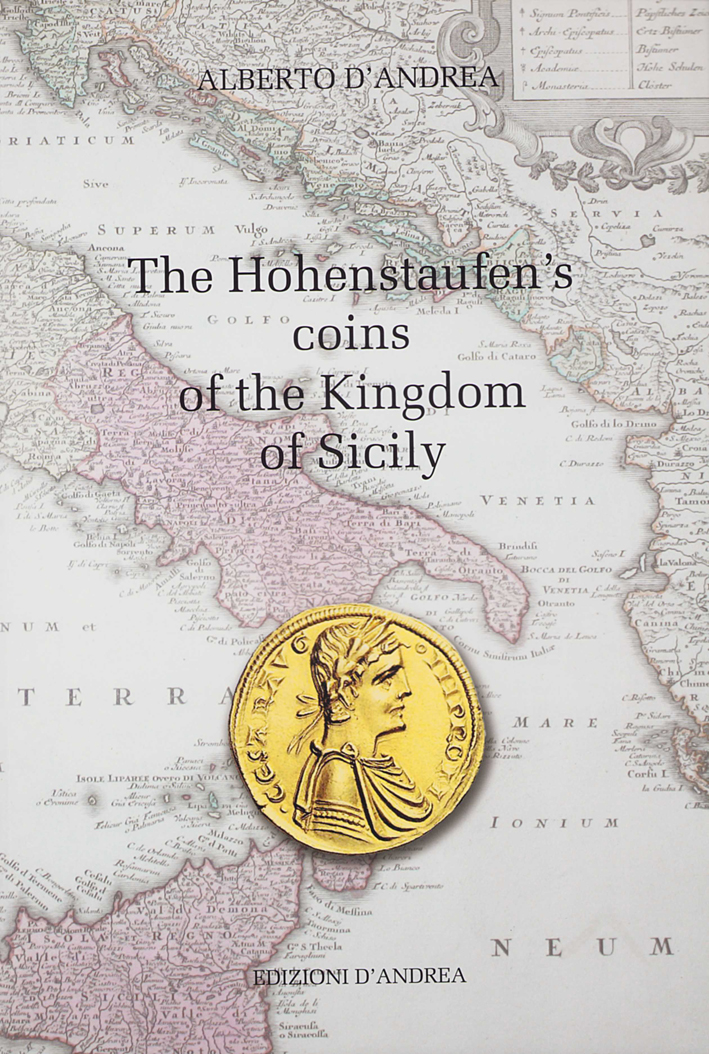
Alberto D'Andrea,The Hohenstaufen's coins of the Kingdom of SicilyRoseto degli Abruzzi 2013ISBN 978-88-98330-01-0112 S./pp., zahlr. SW- und Farbabb./num. colour and b/w-figs., 33 x 22 cm; broschiert/softcover
Nikolaus Schindel, Sylloge Nummorum Arabicorum. Österreich Band I:Frühislamische Kupfermünzen nach der Reform von 77 AH (696/697 n. Chr.)Wien 2025ISBN 978-3-200-10320-7370 S./pp., über 1400 Münzabbildungen/ more than 1440 figs. of coins, 29,7 x 21 cm; kartoniert/hardcover Der Band „Sylloge Nummorum Arabicorum Österreich Band I: Frühislamische Kupfermünzen nach der Reform von 77 AH (696/697 n. Chr.)“ stellt frühislamische Kupfermünzen vor, die von der Münzreform der umayyadischen Kalifen ‘Abd al-Malik (77 AH, 696/697 n. Chr.) bis in die Mitte des 8. Jhdts. n. Chr. reichen. Auf den Tafeln werden insgesamt 1434 Bronzemünzen in Syllogeform abgebildet. Darüber hinaus wird auf mehr als 150 Seiten ein allgemeiner Überblick über die Kupferprägung der Umayyadenzeit geboten und der hier präsentierte Bestand im größeren numismatischen Kontext diskutiert. Der Band stellt die erste umfassende Gesamtbehandlung der umayyadischen AE-Prägung seit John Walkers Katalog des British Museum aus dem Jahr 1956 dar, und auch wenn er nicht nach Vollständigkeit strebt, kann er als Referenzwerk für postreformatorische islamische Bronzemünzen bis ca. 750 n. Chr. verwendet werden. Eine englische Zusammenfassung präsentiert die wichtigsten Ergebnisse.
Kairos. Anatolian Numismatic Studies 2/2024Istanbul 2024ISSN 3023-7068IV + 143 S./pp., zahlr. S/W-Abb. / num. b/w-figs., 27,5 x 19,5 cm; broschiert / softcover
Yanislav Tachev, The Provincial Coinage of SerdicaSofia 2020 (2025)ISBN 978-619-90409-6-6450 S./pp., 206 S/W-Taf./206 b/w-pls., 21 x 15 cm; kartoniert / hardcoverEnglisch mit Zusammenfassung in Bulgarisch /English with a summary in Bulgarian Serdica is the only city on the territory of today's Bulgaria that issued coins in three different chronological periods. The city mint goes through three radically different phases. Initially it was created as a provincial mint, after a century of operation it was transformed into a branch of the central Roman mint (the end of the reign of Emperor Gallienus (253 – 268) and finally minted Ottoman coins (XVI – XVIII centuries)1. The subject of the proposed work is the provincial coinage of the city. The provincial coinage of Serdica began during the joint reign of the emperors Marcus Aurelius (161 – 180) and Lucius Verus (161 – 169) and with hiatuses of different lengths continued until the period of the independent (260 – 268) rule of Emperor Gallienus (253 – 268). During this one hundred and seven year period, coins were issued in the city for six emperors and their family members. From the conducted research, it is clear that the most intensive coinage was during the sovereign reign of Emperor Karakala (212 – 217).
Yanislav Tachev, Who is Skostokos and all about his Coins Sofia 2024ISBN 978-619-91692-7-8186 S./pp., zahlr. S/W-Abb./num. b/w-figs., 21 x 15 cm; kartoniert / hardcoverEnglisch mit Zusammenfassung in Bulgarisch /English with a summary in Bulgarian The proposed study is devoted to the bronze and silver coins on the reverse seals of which the name ΣKOΣTOKОY is inscribed. The work includes all the coins (bronze rulers and silver city coins) known to date. The study is divided into two parts. The first part consists of two chapters. The first chapter deals with the individual aspects of the earliest coins. These are the bronze ruler coins of the type "head of Apollo / horseman, running right", inscription ΣKOΣTOKOY inscribed above horseman. In the second chapter of the first part, all known posthumous autonomies are covered Lysimachus tetradrachms and drachms signed in the cut with the inscription ΣKOΣTOKOY. In the second part of the study, the problems of the late ruler bronze coins of the type "bust of the ruler / horseman, walking right", inscription ΣKOΣTOKOY are examined. Over the past two centuries, many researchers have published specimens of both the bronze and silver coins with the inscription ΣKOΣTOKOY on the reverse stamps.
Yanislav Tachev, The Coinage of King Cavarus – The Ruler of ThraceSofia 2024ISBN 978-619-91692-6-1190 S./pp., zahlr. S/W-Abb./num. b/w-figs., 21 x 15 cm; kartoniert / hardcoverEnglisch mit Zusammenfassung in Bulgarisch /English with a summary in Bulgarian
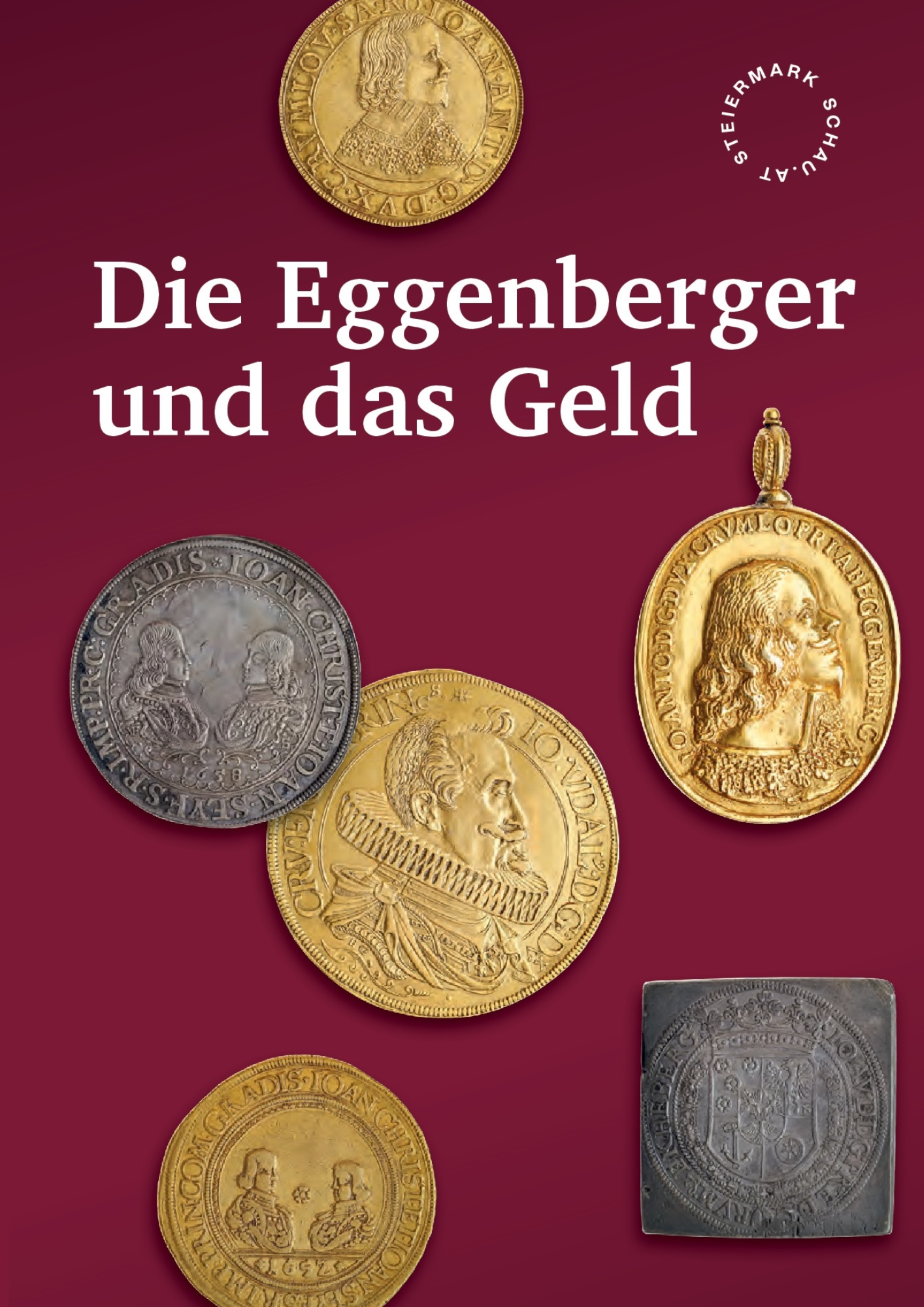
Karl Peitler – Marc Philipp Wahl,Die Eggenberger und das Geld(Begleitband zur Ausstellung im Rahmen der STEIERMARK SCHAU 2025 in Schloss Eggenberg, 26. April bis 2. November 2025)(Schild von Steier – Kleine Schriften 27)Graz 2025ISBN 978-3-903179-77-6175 S./pp., zahlr. Farbabb./num. colour figs., 23 x 16,5 cm; broschiert/softcoverDie Publikation beinhaltet Essays zu den Münzen und Medaillen der Familie Eggenberg und zu den Kippermünzen des Münzkabinetts des Universalmuseums Joanneum und bietet einen ausführlichen Katalogteil, in dem die in der Ausstellung gezeigten 284 Münzen und Medaillen aus dem Münzkabinett des Universalmuseums Joanneum in Wort und Bild erfasst sind. Er gliedert sich in vier Teile: 1. Münzen und Medaillen der Familie Eggenberg (Kat.-Nrn. 1- 46), 2. Reguläre Münzen der Kaiser Ferdinand II., Ferdinand III. und Leopold I. aus Münzstätten des österreichischen Reichskreises (Kat.-Nrn. 47-198), 3. Münzen der Kipperzeit aus Münzstätten des Heiligen Römischen Reiches (Kat.-Nrn. 199-277) und 4. Weitere Münzen und Medaillen (Kat.-Nrn. 278-284). Zur Ausstellung: Im Jahr 1625 gewährte Kaiser Ferdinand II. Hans Ulrich von Eggenberg und seinen Nachkommen das Privileg, Gold- und Silbermünzen mit ihren eigenen Bildnissen und Namen zu prägen. Knapp über 60 Jahre lang machten die Eggenberger von ihrem Prägerecht Gebrauch und stellten Dukaten, Taler, Gulden und Groschen her. Heute sind diese Münzen einzigartige Raritäten.Das Münzkabinett verfügt durch seine weit in das 19. Jahrhundert zurückreichende Sammlungshistorie über hervorragende Zeugnisse für die Prägetätigkeit der Eggenberger.In der Sonderausstellung werden Aufstieg, Glanz und Niedergang der Dynastie der Eggenberger anhand dieser Münzen dargestellt. Darüber hinaus werden Beispiele für die Vielfalt der Münzprägung im Heiligen Römischen Reich des 17. Jahrhunderts präsentiert.Es wird aber auch der geldgeschichtliche Hintergrund beleuchtet, als es am Beginn des Dreißigjährigen Krieges zum Zusammenbruch des Münzwesens kam und Kaiser Ferdinand II. eine Finanzkrise bewältigen musste, die einem Staatsbankrott gleichkam.Außerdem wird die Verbindung Hans Ulrichs von Eggenberg zum Netzwerk eines Konsortiums thematisiert, an das der Kaiser das Münzwesen in Böhmen, Mähren und Österreich verpachtete und das durch die Herstellung von schlechten Münzen hohe Gewinne erzielte.
Gabriel Mircea Talmațchi,Greeks, Romans and local population in the territory between Danube and the Black Sea (2nd century BC-1st century AD). An economic history from monetary perspective Iaşi 2024ISBN 978-606-714-878-7468 S./pp., Farb- und S/W-Abb./colour and b/w-figs., 21 x 15 cm; broschiert/softcover
Hüseyin Köker,Komama Tarihi ve SikkeleriAnkara 2024ISBN 978-625-6872-37-6XIV + 240 S./pp., 22 Farbtaf./22 colour pls., 28 x 20 cm; broschiert/softcover
Österreichische Forschungsgesellschaft für Numismatik – Gesellschaft für Landeskunde und Denkmalpflege Oberösterreich (Hrsg.) ,PRO RE. Festschrift für Bernhard Prokisch.(Veröffentlichungen des Institutes für Numismatik und Geldgeschichte, Band 27)Wien 2025ISBN 978-3-9504268-8-5500 S./pp., zahlr. Farb- und S/W-Abb./num. colour and b/w-figs., 30,5 x 21,5 cm; kartoniert/hardcover Die Österreichische Forschungsgesellschaft für Numismatik und die Gesellschaft für Landeskunde und Denkmalpflege Oberösterreich haben sich zusammengefunden, um Herrn Priv.-Doz. Dr. Bernhard Prokisch diese Festschrift zum Übertritt in den Ruhestand zu widmen. Der Titel spricht eine der Grundhaltungen seines beruflichen und wissenschaftlichen Lebens an: stets PRO RE (immer für die Sache). Die zahlreichen und vielfältigen Beiträge dokumentieren sein wissenschaftliches Interesse und Wirken.