
Hüseyin Uzunoğlu,The Inscriptions of Akmoneia(Gephyra Monographs 8)Wien 2026ISBN 978-3-85161-342-1426 S./pp., zahlr. S/W-Abb. / num. b/w-figs., 29,7 x 21 cm; kartoniert / hardcoverThe present volume incorporates a total of 327 inscriptions from Akmoneia and its territory, enriched with detailed philological and historical commentary. As such, it offers the first comprehensive monographic treatment of the city’s epigraphic record.

Alexandra-Kyriaki Wassiliou-Seibt,Im Zeichen der Siegel. Geschichte und Kultur im östlichen Mittelmeerraum von römischer Zeit bis ins Mittelalter(Nilus 31)Wien 2026ISBN 978-3-85161-339-1109 S./pp., zahlr. Farb- und S/W-Abb. / num. colour and b/w-figs., 24 x 17 cm; englisch Broschur / softcoverBereits in prähistorischer Zeit waren Siegel Objekte eines Kontrollmechanismus. Tradition im Siegelwesen hat der Mittelmeerraum, was als Entwicklungsgeschichte im vorliegenden Katalog zur Ausstellung „Im Zeichen der Siegel: Geschichte und Kultur im östlichen Mittelmeerraum von römischer Zeit bis ins Mittelalter“ vorgestellt wird. Tonsiegel auf Papyrustexten ermöglichen Einblicke in die soziale, sprachliche und religionsgeschichtliche Vielfalt Ägyptens von spätrömischer bis früharabische Zeit. Bleisiegel erhellen über ihre Inschriften geographische Lebensräume, Gesellschaft, staatliche und kirchliche Verwaltungsstrukturen des oströmischen Reiches (324-1453).

Emel Erten – Diane Favro – Fikret K. Yegül – Murat Özyıldırım (eds.), Selevcia Ad Calycadnum XVI/2026Ankara 2026ISBN 978-625-8550-34-4ISSN 2148-4124366 S./pp., zahlr. S/W-Abb./num. b/w-figs., 24 x 16 cm; broschiert/softcover

Kairos. Anatolian Numismatic Studies 3/2025Istanbul 2025ISSN 3023-7068IV + 139 S./pp., zahlr. S/W-Abb. / num. b/w-figs., 27,5 x 19,5 cm; broschiert / softcover İÇİNDEKİLERSilver Coinage of Seleucus II Callinicus from Asia Minor: Production and Circulation / II. Seleukos Kallinikos'un Küçük Asya Gümüş Sikkeleri: Darp ve SirkülasyonBarbara Zając,Isis vs. Sarapis: Egyptian Cults on the Coins of Pontus and Bithynia in the Roman Period / Isis vs. Sarapis: Roma Döneminde Pontos ve Bithynia Sikkelerinde Mısır KültleriZeynep Çizmeli-Öğün – Marie-Christine Marcellesi, Le Trésor de Monnaies Romaines Tardives Trouvé dans une Tombe du Letoon près de Xanthos en Lycie / Xanthos Yakınlarındaki Letoon'da Bir Mezarda Ele Geçen Geç Roma Sikkeleri DefinesiS. Ranucci – S. Casciarri – V. Chiaraluce – L. Donnini – M. Gasperini,Monete Romane Provinciali dalla Via Flaminia a Carsulae, Vecchi Ritrovamenti e Recenti Acquisizioni / Via Flaminia'dan Carsulae'ye Roma Eyalet Sikkeleri: Eski Buluntular ve Yeni KazanımlarYannis Stoyas,The Emperor and the Prophet: An Extraordinary Basilikon Issue of Andronikos II Palaiologos with the Prophet-King Solomon / İmparator ve Peygamber: Andronikos II Palaiologos'un Peygamber-Kral Süleyman Tasvirli Olağanüstü Bir Basilikon DarbıShort NoteDinçer Savaş Lenger,Reattribution of a Bronze Coin to Larissa in Aiolis / Bir Bronz Sikkenin Aiolis'teki Larissa'ya Yeniden AtfıSalvage ExcavationŞahan Kırçın – Merve Kaya Köroğlu,Coin Finds from Salvage Excavations in Turkey: Hasköy (Havsa–Edirne) / Türkiye'deki Kurtarma Kazılarında Ele Geçen Sikkeler: Hasköy (Havsa–Edirne)Koray Konuk – Burcu Dama,Numismatica Turcica 2024: A Review of Numismatic Publications in Turkish

Gabriel Mircea Talmațchi,From the Dominium Ponti Euxini to the Koinon ton Hellenon, from the Ripa Thraciae to the Province of Moesia Inferior. Roman Republican and Early Imperial Denarii in the Istro-Pontic Territory. Isolated finds(Coins from Roman Sites and Collections of Roman Coins from Romania, vol. XXI)Cluj-Napoca 2026ISBN 978-630-372-073-9202 S./pp., zahlr. S/W-Abb./num. b/w-figs., 29,7 x 21 cm; broschiert/softcoverGeographically, the area in focus belongs to the Istro-Pontic region, known today as Dobrudja, a territory that, until the course of the 1st century AD, represented the northeastern extremity of the Thracian space. In fact, its west Pontic coast was integrated, starting from the 1st century BC, into the anti-Roman Pontic kingdom of Mithridates VI Eupator (120–63 BC), within a dominium Ponti Euxini. In the same area, under Roman influence, a system of alliances was formed among the western Pontic cities, reflecting a Greek community (Κοινόν τῶν Ἑλλήνων). The growing importance of the Istro-Pontic region for the policy of Imperial Rome led to the establishment of a customs office called Ripae Thraciae, which was added to the customs district Portorium Illyrici Utriusque, attested under Claudius, but very possibly created as early as Augustus or even earlier. Strabo, referring to the Istro-Pontic territory and part of the Thracian land, speaks of Little Scythia (μικρᾱ Σκυθία/ Mikrá Skythia), viewed as an extension of the Scythian lands located north of the Black Sea (beyond the Tyras and Istrus, in the context of the Scythians’ settlement “in the nearby land”). This name has no connection to the later Roman province of Scythia, which would encompass the Istro-Pontic territory during the 4th–7th centuries AD. Chronologically, the period addressed in this work covers approximately 280 years of the evolution of the Dobrujan region, representing a relatively narrow temporal unit. Its conclusion coincides with a phase marked by numerous military events occurring in the Lower Danube area, within an environment rife with insecurity, such as those that took place during the reign of Emperor Domitianus. A consequence of these circumstances is the numerous hoards of coins hidden during this time, including those identified in the Istro-Pontic territory. This upper limit, considered as the chronological boundary, can be accepted if it is assumed that the hoards containing Republican and early Imperial coins discovered were assembled or buried by this date.

Gabriel Mircea Talmațchi,From the Dominium Ponti Euxini to the Koinon ton Hellenon, from the Ripa Thraciae to the Province of Moesia Inferior. Roman Republican and Early Imperial Denarii in the Istro-Pontic Territory. Coin hoards(Coins from Roman Sites and Collections of Roman Coins from Romania, vol. XXII)Cluj-Napoca 2026ISBN 978-630-372-074-6240 S./pp., zahlr. S/W-Abb./num. b/w-figs., 29,7 x 21 cm; broschiert/softcoverGeographically, the area in focus belongs to the Istro-Pontic region, known today as Dobrudja, a territory that, until the course of the 1st century AD, represented the northeastern extremity of the Thracian space. In fact, its west Pontic coast was integrated, starting from the 1st century BC, into the anti-Roman Pontic kingdom of Mithridates VI Eupator (120–63 BC), within a dominium Ponti Euxini. In the same area, under Roman influence, a system of alliances was formed among the western Pontic cities, reflecting a Greek community (Κοινόν τῶν Ἑλλήνων). The growing importance of the Istro-Pontic region for the policy of Imperial Rome led to the establishment of a customs office called Ripae Thraciae, which was added to the customs district Portorium Illyrici Utriusque, attested under Claudius, but very possibly created as early as Augustus or even earlier. Strabo, referring to the Istro-Pontic territory and part of the Thracian land, speaks of Little Scythia (μικρᾱ Σκυθία/ Mikrá Skythia), viewed as an extension of the Scythian lands located north of the Black Sea (beyond the Tyras and Istrus, in the context of the Scythians’ settlement “in the nearby land”). This name has no connection to the later Roman province of Scythia, which would encompass the Istro-Pontic territory during the 4th–7th centuries AD. Chronologically, the period addressed in this work covers approximately 280 years of the evolution of the Dobrujan region, representing a relatively narrow temporal unit. Its conclusion coincides with a phase marked by numerous military events occurring in the Lower Danube area, within an environment rife with insecurity, such as those that took place during the reign of Emperor Domitianus. A consequence of these circumstances is the numerous hoards of coins hidden during this time, including those identified in the Istro-Pontic territory. This upper limit, considered as the chronological boundary, can be accepted if it is assumed that the hoards containing Republican and early Imperial coins discovered were assembled or buried by this date.

Ursula Schachinger, Römische Münzen im Salzkammergut. Einzelfunde und Hortfunde als Zeugnisse von Handel, Verkehr und Krisenzeiten (Forschungen zur geschichtlichen Landeskunde der Steiermark, 102)Graz 2026ISBN 978-3-901251-71-9ISSN 2078-0141300 S./pp., zahlr. Farb- und S/W-Abb./num. colour and b/w-figs., 29,7 x 21 cm; broschiert/softcover

Krystina Kubina – Giulia Rossetto (Hrsg.),Spurensuche Byzanz.Fragmente des Griechischen Mittelalters(Nilus 30)Wien 2026ISBN 978-3-85161-338-4175 S./pp., zahlr. Farb- und S/W-Abb. / num. colour and b/w-figs., 24 x 17 cm; englisch Broschur / softcoverGeschichte ist immer unvollständig. Welche Fragmente überliefert wurden, folgt einem Zusammenspiel von Zufall und bewusster Auswahl. Dies gilt auch für das byzantinische Kaiserreich, das im Mittelalter den östlichen Mittelmeerraum dominierte. Die Sonderausstellung des Papyrusmuseum der Österreichischen Nationalbibliothek widmet sich dem Fragment als Chance und Herausforderung für unser Verständnis vergangener Kulturen und unser Wissen über die byzantinische Geschichte: Wie überlebten physische Bruchstücke älterer Bücher? Wie wurden Textausschnitte in neue Zusammenhänge gestellt? Wie erlauben uns Einzeldokumente, eine komplexe Gesellschaft zu rekonstruieren?

Valonia. A Journal of Anatolian Pasts 2 (2025)Istanbul 2025ISSN 3062-0120VI + 98 S./pp., zahlr. Farb-Abb. / num. colour figs., 26 x 19 cm; broschiert / softcover

Studia Hercynia XXIX/2 Trans-Adriatic Dynamics. Late Bronze to Early Iron Age Matt-Painted Pottery in the Southwestern Balkans and Southern ItalyPrag 2026ISSN 1212-5865146 S./pp., Farb- und S/W-Abb./ colour and b/w-figs., 27 x 19 cm; broschiert/softcover

Francisco J. García Fernández – Antonio Sáez Romero – Violeta Moreno Megías – Max Luaces (eds.),From East to West and Back Again. Societies, Economics and Ceramics in the Hellenistic WorldProceedings of the 5th Conference of IARPotHP, Seville, June 2021, 22th-25th(IARPotHP 5)Wien 2026ISBN 978-3-85161-334-6697 S./pp., zahlr. Farb- und S/W-Abb./num. colour and b/w-figs., 29,7 x 21 cm; kartoniert/hardcover

Ersin Çelikbaş – Rabia Aktaş (eds.),Hadrianopolis. Building Complex with Bath Storage Finds / Hamamlı Yapı Kompleksi: Depo buluntuları(Hadrianopolis Serisi/Series III)Ankara 2025 ISBN 978-625-8550-08-5X + 129 S./pp., zahlr. Farb- und S/W-Abb./num. colour and b/w-figs., 29,7 x 21 cm; kartoniert/hardcoverDas Buch mit dem Titel „Hadrianopolis Bath Building Complex: Warehouse Finds“ handelt von den Funden, die bis heute im Lagerbereich des Hamamlı-Gebäudekomplexes erhalten geblieben sind, als Ergebnis der zwischen 2023 und 2025 durchgeführten Ausgrabungen in Hadrianopolis.

Gabriele Koiner,Antike Skulpturen aus Zypern im Universalmuseum Joanneum in Graz(Schild von Steier, Beiheft 14)Graz 2026ISBN 978-3-903179-90-5ISSN 2078-0141187 S./pp., zahlr. Farb-Abb./num. colour figs., 28 x 22 cm; broschiert/softcover

Barbara Porod – Ortwin Hesch – Johanna Kraschitzer (Hrsg.),Flavia Solva. Die Ausgrabungen des Universalmuseums Joanneum. Band 1 Grabungstagebücher Walter Schmid, Mosaikboden, Gebrauchskeramik, Feinkeramik, Glas, Tierreste (Schild von Steier, Beiheft 13)Graz 2025ISBN 978-3-903179-84-4ISSN 2078-0141576 S./pp., zahlr. Farb- und S/W-Abb./num. colour and b/w-figs., USB-Stick, 28 x 22 cm; kartoniert/hardcoverSeit 150 Jahren gräbt das Universalmuseum Joanneum in Flavia Solva – und nun liegen endlich die kompakten Ergebnisse einer lange überfälligen wissenschaftlichen Aufarbeitung vor. Fast 2000 Kisten mit bislang kaum gesichtetem Fundmaterial warteten in den Depots darauf, systematisch untersucht zu werden. Dank der seit 2021 laufenden Forschungsinitiative – ermöglicht durch finanzielle Mittel des Landes Steiermark sowie Bundesförderungen für den Denkmalschutz – konnte nun ein großer Schritt gesetzt werden: Rund 85 % des Materials waren zuvor völlig unbearbeitet, jetzt liegen die Erkenntnisse erstmals gesammelt vor. Das neue Buch bietet faszinierende Einblicke in die archäologische Forschungsgeschichte und macht jahrzehntelang verborgene Funde zugänglich. Ein Muss für alle, die sich für Archäologie, Steiermark und römische Geschichte interessieren!

Philia. International Journal of Ancient Mediterranean Studies. 11, 2025Wien 2025ISSN 2149-505XISBN 978-3-85161-332-2240 S./pp., zahlr. S/W-Abb./num. b/w-figs., 29,7 x 21 cm; kartoniert / hardcover

Gephyra 30, 2025Wien 2025ISBN 978-3-85161-333-9ISSN 1309-3924220 S./pp., zahlr. S/W-Abb./num. b/w-figs., 29,7 x 21 cm; broschiert/softcover

Fundort Wien. Berichte zur Archäologie 28/25Wien 2025ISBN 978-3-85161-329-2384 S./pp., zahlr. Farb-, S/W-Abb. und Pläne im Text, 29,7 x 21 cm; kartoniert/hardcover
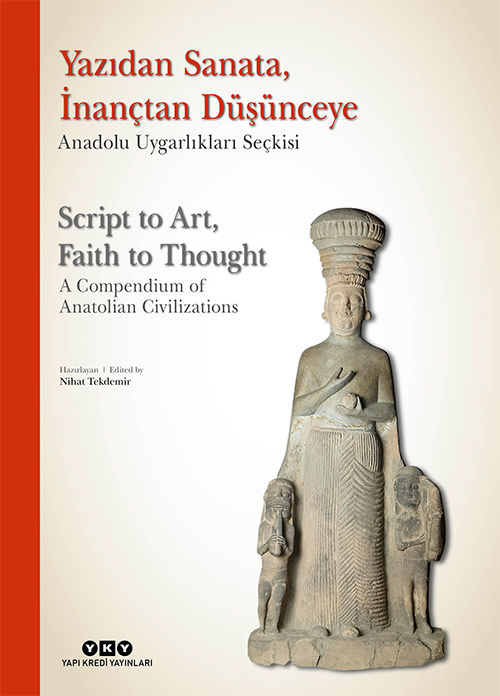
Nihat Tekdemir (ed.),Script to Art, Faith to Thought – A Compendium of Anatolian CivilizationsIstanbul 2025ISBN 978-975-08-6623-4 (paperback) ISBN 978-975-08-6624-1 (hardcover) XX + 396 S./pp., zahlr. Farb- und S/W-Abb./num. colour and b/w-figs., 33 x 23,5 cmzweisprachig englisch – türkischbilingual english – turkish

N. Eda Akyürek Şahin – Roman Jacobek – Fatih Onur – Diether Schürr (Hrsg./eds.),Von Damaskus bis Rom. Wilhelm Müseler, Gesammelte Schriften.(Gephyra Monographs 7)Wien 2025ISBN 978-3-85161-320-9722 S./pp., zahlr. S/W-Abb. / num. b/w-figs., 29,7 x 21 cm; kartoniert / hardcoverDer Band "Von Damaskus bis Rom" versammelt 25 Beiträge des Numismatikres Wilhelm Müseler in deutscher und englischer Sprache, die in den Jahren 1990 bis 2025 erschienen sind sowie einen bislang unpublizierten Aufsatz.The volume “From Damascus to Rome” brings together 25 articles by numismatist Wilhelm Müseler in German and English, published between 1990 and 2025, as well as a previously unpublished essay.

TÜBA - AR 36Türkiye Bilimler Akademisi Arkeoloji Dergisi 36, 2025Ankara 2025ISSN 1301-8566192 S./pp., zahlr. Farb- und S/W-Abb./num. colour and b/w-figs., 29,7 x 21 cm, broschiert/softcoverArtikel in Türkisch und Englisch / articles in turkish and english
Studia Hercynia XXIX/1 Identity negotiation and social competition through a materiality lens(Papers presented at the 29th Annual meeting of the European Association of Archaeologists in Belfast, 2023)Prag 2025ISSN 1212-5865202 S./pp., Farb- und S/W-Abb./ colour and b/w-figs., 27 x 19 cm; broschiert/softcover
Emel Erten – Diane Favro – Fikret K. Yegül – Murat Özyıldırım (eds.), Selevcia Ad Calycadnum XV/2025Ankara 2025ISBN 978-625-6925-83-0ISSN 2148-4124409 S./pp., zahlr. S/W-Abb./num. b/w-figs., 24 x 17 cm; broschiert/softcover
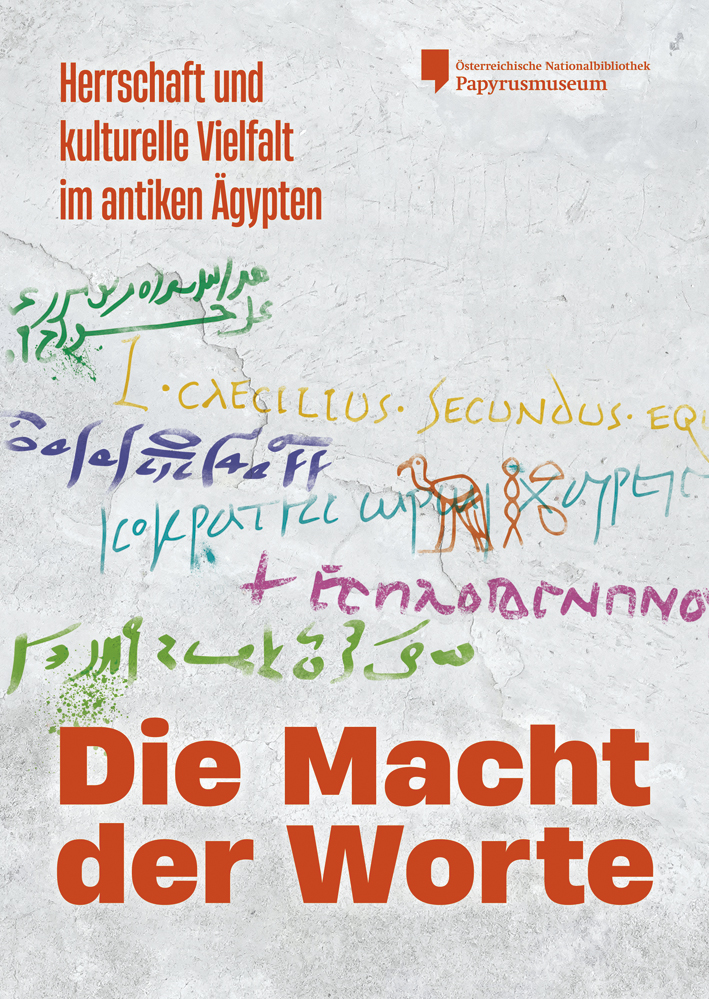
Bernhard Palme – Angelika Zdiarsky (Hrsg.),Die Macht der Worte. Herrschaft und kulturelle Vielfalt im antiken Ägypten(Nilus 29)Wien 2025ISBN 978-3-85161-324-7161 S./pp., zahlr. Farb- und S/W-Abb. / num. colour and b/w-figs., 24 x 17 cm; englisch Broschur / softcover Sprache ist die zentrale Ausdrucksform des Menschen, Schrift die wichtigste Kulturtechnik zur Kommunikation und Wissensvermittlung. Eine gemeinsame Sprache stiftet Identität und fördert Zusammengehörigkeit, Schrift verbreitet Gedanken und bewahrt ein kulturelles Gedächtnis.Die Ausstellung zum multilingualen Ägypten zeigt anhand zahlreicher Papyri die verschiedenen Sprachen, die von ca. 1500 v. Chr. bis 1000 n. Chr. im Land am Nil gesprochen und geschrieben wurden, sowie deren Einfluss auf Verwaltung, Kultur und Gesellschaft, wie etwa die Kommunikation zwischen Herrschern und Beherrschten oder die Rolle der Priester und Kulte bei der Bewahrung der religiösen Identität.
Zsusanna Szántó,From Ioudaioi to Hebraioi.The Evolution of Ethnic Designations in Late Antique Egypt(István Hahn Lecturers IX)Budapest 2025ISBN 978-963-489-778-1ISSN 2061-734898 S./pp., 20 x 13 cm; broschiert/softcover