![Gitler, Haim – Catharine Lorber – Jean-Philippe Fontanille : The Yehud Coinage. A Study and Die Classification of the Provincial Silver Coinage of Judah (Numismatic Studies and Researches [NSR] XII)](https://phoibos.at/media/35/a3/7a/1771429679/YehudCoinage.jpg?ts=1771429679 "Gitler, Haim – Catharine Lorber – Jean-Philippe Fontanille : The Yehud Coinage. A Study and Die Classification of the Provincial Silver Coinage of Judah (Numismatic Studies and Researches [NSR] XII)")
Haim Gitler – Catharine Lorber – Jean-Philippe Fontanille, The Yehud Coinage. A Study and Die Classification of the Provincial Silver Coinage of Judah (Numismatic Studies and Researches [NSR] XII)Jerusalem 2023ISBN 978-965-598-229-9XI, 544 S./pp., zahlr. Farb- und S/W-Abb./num. colour and b/w-figs., 28 x 21 cm; kartoniert/hardcoverThis volume presents a die study of the provincial silver coinage of Judah in the late Persian, Macedonian, and early Hellenistic periods. It offers correct descriptions of the coins, their designs, and their inscriptions; enumerates the obverse and reverse dies identified for each of the 44 recorded types; and explains the probable sequence of the issues as deduced from iconographic associations and die links. The iconography of the coin types is examined in depth, with comparisons to motifs in Greek, Persian, and ancient Near Eastern art, including other local coinages and sources in Judahite material culture. The monograph also analyzes data relating to the metrology, metal content, and circulation of the coinage. Overall, the study attempts to place the Yehud coinage in its historical context and to define its role in the economy of the ancient province of Judah.

Yoav Farhi, The City of Gaza in the Roman Period. The Numismatic Evidence: First Century BCE–Third Century CE (Corpus Nummorum Palaestinensium VI)Jerusalem 2025ISBN 978-965-7849-39-2XVI + 484 S./pp., zahlr. Farb- und S/W-Abb./num. colour and b/w-figs., 28 x 21 cm; kartoniert/hardcoverThis book is a comprehensive discussion examining the production and significance of the coinage struck by the city of Gaza under Roman rule from the conquest of this region by Pompey (64/3 BCE) to the end of the municipal minting in the second quarter of the third century (241/2 CE). The data presented are based on the study of some 4494 bronze and silver coins minted in Gaza during the Roman period. As many specimens as possible were located during some 20 years of a through and wide search, at various publications and in public and private collections especially in the Middle East, Europe and the USA. The catalogue presents 318 types with hundreds of variants and the photographs of 833 coins. This is the first time that such comprehensive research has been conducted regarding a polis in Roman Palestine with a vast volume of minting as in the case of Gaza. This research, which examines the coinage of the largest and most important city in southern Roman Palestine, contributes not only to a better understanding of the city itself, but also can offer new perspectives on the broad subject of city coins of the Roman period, and especially those of this region.
![Gitler, Haim – Mati Johananoff – Oren Tal : A Corpus of Samarian Coinage from the Persian Period, Volumes I & II (Numismatic Studies and Researches [NSR] XIII and XIV)](https://phoibos.at/media/3a/99/d8/1771430370/CSC%20Cover.jpg?ts=1771430370 "Gitler, Haim – Mati Johananoff – Oren Tal : A Corpus of Samarian Coinage from the Persian Period, Volumes I & II (Numismatic Studies and Researches [NSR] XIII and XIV)")
Haim Gitler – Mati Johananoff – Oren Tal, A Corpus of Samarian Coinage from the Persian Period, Volumes I & II (Numismatic Studies and Researches [NSR] XIII and XIV) Jerusalem 2025ISBN 978-965-7849-41-5vol. I [= NSR, vol. XIII]: 254 S./pp., Illustrationen/figures vol. II [= NSR, vol. XIV]: 340 S./pp., Illustrationen/figuresThis two-volume monograph, A Corpus of Samarian Coinage, is the definitive culmination of a major research program focused on the Samarian minting authority during the Persian period. This coinage represents one of the earliest and most varied official coinages produced in the southern Levant, likely being issued from the late fifth century BCE until after the Greco-Macedonian conquest. While building on earlier scholarship, this work offers a substantive re-evaluation of the field. It incorporates numerous newly identified coin types and establishes a robust, modern classification system essential for all future study. The data is based on an exhaustive, multi-year study of the entire corpus of known Samarian issues, involving the global examination of specimens in publications and in public and private collections.

Ivan Varbanov, Roman Coins and their prices realized. I. Roman Republican Coins. Volumes I & IIvol. I: Chronology of the Roman Republican Coinage. Catalogue: Gold coinage. Silver coinage – Part Onevol. II: Catalogue: Silver coinage – Part Two. Bronze coinage. IndexesBurgas 2025vol. I: ISBN 978-619-93185-0-8vol. II: ISBN 978-619-93185-1-5vol. I: 808 S./pp., zahlr. Farb- und S/W-Abb. / num. colour and b/w-figs., 21 x 15 cm; kartoniert / hardcovervol. II: 756 S./pp., zahlr. Farb- und S/W-Abb. / num. colour and b/w-figs., 21 x 15 cm; kartoniert / hardcoverThere is much magic, beauty, and challenge in numismatics, but the Roman coinage remains my one and only undisputed favorite. For more than 50 years, I have been collecting valuable information and I can confidently say that I have gathered the largest database of Roman coins, with facts about millions of pieces, currently available in private collections or expositions and archives of museums, with essential details on tens of thousands of auctions, eBay sales, and many other sources. I was fortunate to have collected this database during a time when, thanks to the rapidly developing metal detecting methods and technologies, many coins and troves were found around the world, as if trying to fill the gaps in the great puzzle of Roman Republican, Imperatorial, and Imperial coinage, thus providing a more complete picture of Roman coins and mint craft. To begin with, I published a few books on Greek Imperial and Roman Provincial Coinage, such as the three volumes of “Greek Imperial Coinage”, covering the provincial coinage at the mints on the Balkan Peninsula, as well as the two volumes of “The Coinage of Philippopolis”, covering the complete mintcraft in this ancient city. However, the main part of my database consists of coins issued at the central Roman mints. As the process of identification and classification recently became almost unmanageable due to the vast number of Roman coins discovered so far, I decided to publish the already available information in catalogs, initially focusing on the Roman Republican coinage. This work aims to examine the Roman Republican coinage, covering the period from the irregularly shaped pieces of bronze known as Aes Rude (a.k.a. Aes Infectum or Imperfectum) to the period 8th – 3rd century BC and the beginning of Roman Imperatorial coinage (it will be considered in a separate volume), roughly around 49 BC. The purpose of this catalogue does not lie in providing a complete analysis of all aspects of the Republican coinage. In his work “Roman Republican coinage”, Michael H. Crawford dwells in detail on this topic and needs not be repeated. The current book simply aims to summarize the data already presented by the prominent scholars М. Crawford, А. Banti, L. Simonetti, E. Sydenham, E. Babelon, and all those who have contributed to the study and systematization of the Roman Republican coinage. The book also supplements the existing research by presenting many new coins that lack any previous description, together with their unpublished variants. It also covers a good number of hitherto unknown inscriptions, control marks, symbols, letters, or digits discovered after the publication of the fundamental works by the authors mentioned above. Apart from the main coin types, the classification presented herein describes all available varieties, including those absent in Crawford’s research, each marked with a separate number. All hybrid Republican coins for which I have found sufficient information are analyzed as well. A complete description of the coins issued by the mints during The Social War – the so-called denarii of the Marsic Confederation – is also added in this catalog. A fundamental principle I try to follow in my work is to compose each book in a manner that I would personally expect to see for any such data arranged in a catalog. My presentation also follows the requirements and recommendations gathered through discussions with colleagues and collectors from all over the world. Hence, the key principle of this catalog is to facilitate quick identification of any already acquired coins or, alternatively, provide complete data on items one might wish to acquire. Therefore, all the presented coins are arranged based on the metal they are made of, i.e., in the following sequence: gold, silver, bronze. Coins made of the same metal are further classified by their years of issue, as well as by their denominations. The design of a coin type is displayed in a photo adjacent to its description. Photos are provided on a 1:1 scale, apart from a few exceptions, where the scale is stated at the base. The year of issue is followed by the average value based on the weight of all coins of a specific variety. Since weight may vary within a wider range for some of the bronze items presented, the minimum, average, and maximum weight of the specimen is also provided. After a detailed description of the obverse and reverse for a given coin, all references for the same are duly listed, followed by the number of specimens used. Below each description, you will also find information about the specific prices at which the coin was sold, depending on its quality. Different prices are given for the different quality types: F (fine), VF (very fine), EF (extra fine), and MS (mint state). Furthermore, each quality type is featured with the minimum, average, and maximum price (min/avg/max) at which the coin was previously sold. All prices are in euros or have been converted to euros based on the exchange rate on the date the coin was sold, if it was originally sold in another currency. A detailed Appendix is enclosed at the end of this catalog, specifying all inscriptions, control marks, digits, or symbols visible on any Republican coins. After each of these marks, you will find listed the pages where the same symbol appears. For faster and easier identification, the Crawford numbering is included in the beginning of the Appendix, along with the corresponding numbering as per this catalog.
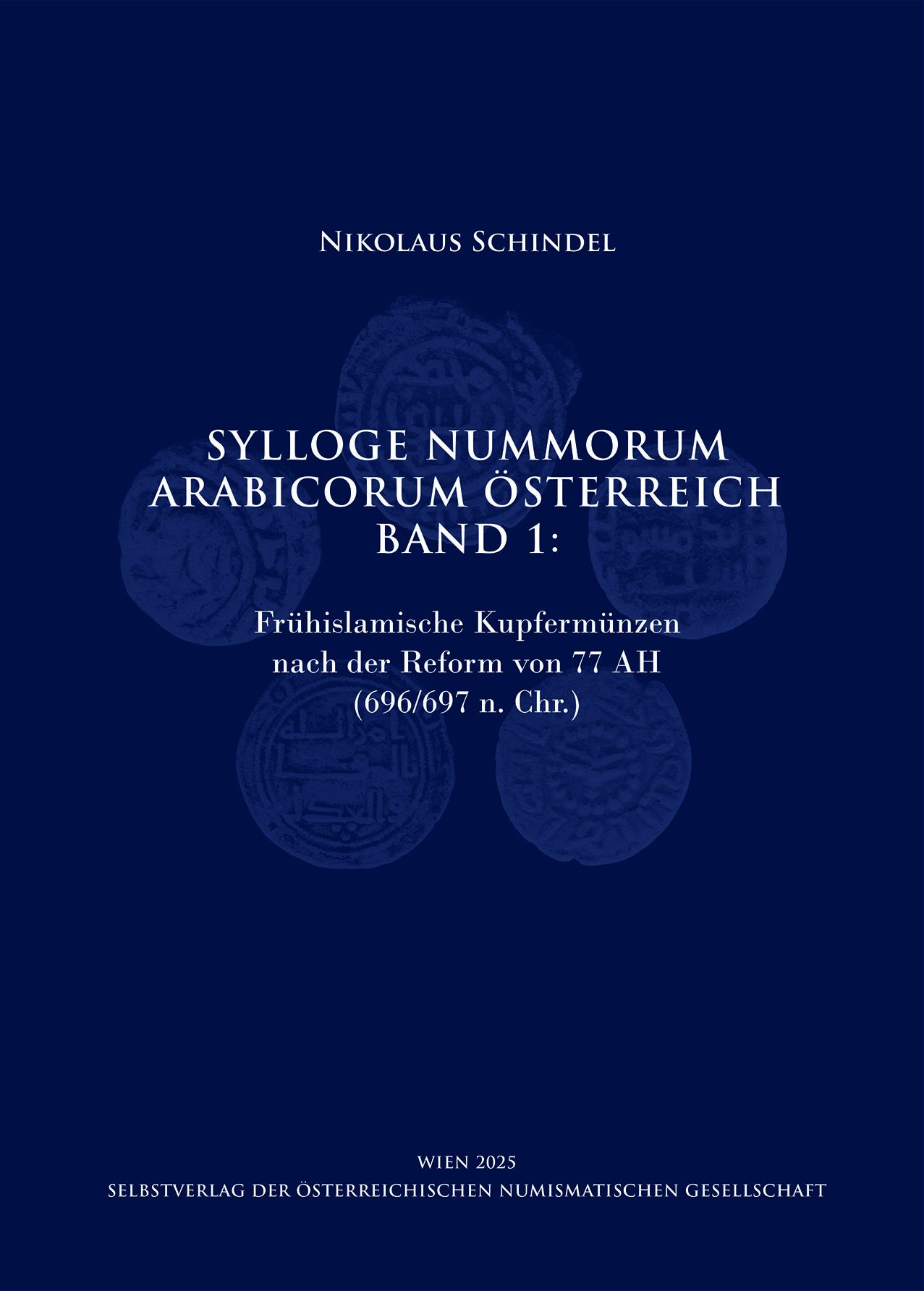
Nikolaus Schindel, Sylloge Nummorum Arabicorum. Österreich Band I:Frühislamische Kupfermünzen nach der Reform von 77 AH (696/697 n. Chr.)Wien 2025ISBN 978-3-200-10320-7370 S./pp., über 1400 Münzabbildungen/ more than 1440 figs. of coins, 29,7 x 21 cm; kartoniert/hardcover Der Band „Sylloge Nummorum Arabicorum Österreich Band I: Frühislamische Kupfermünzen nach der Reform von 77 AH (696/697 n. Chr.)“ stellt frühislamische Kupfermünzen vor, die von der Münzreform der umayyadischen Kalifen ‘Abd al-Malik (77 AH, 696/697 n. Chr.) bis in die Mitte des 8. Jhdts. n. Chr. reichen. Auf den Tafeln werden insgesamt 1434 Bronzemünzen in Syllogeform abgebildet. Darüber hinaus wird auf mehr als 150 Seiten ein allgemeiner Überblick über die Kupferprägung der Umayyadenzeit geboten und der hier präsentierte Bestand im größeren numismatischen Kontext diskutiert. Der Band stellt die erste umfassende Gesamtbehandlung der umayyadischen AE-Prägung seit John Walkers Katalog des British Museum aus dem Jahr 1956 dar, und auch wenn er nicht nach Vollständigkeit strebt, kann er als Referenzwerk für postreformatorische islamische Bronzemünzen bis ca. 750 n. Chr. verwendet werden. Eine englische Zusammenfassung präsentiert die wichtigsten Ergebnisse.

Barbara Borngässer,Translozierung. Über das Versetzen und Wiederverwenden von BauwerkenWien 2025ISBN 978-3-85161-323-0291 S./pp., zahlreiche Farb- u. SW-Abb./num. colour and b/w-figs., 17,7 x 25,0 cm; kartoniert/hardcover Kurzbeschreibung:Bauwerke gelten als ortsgebunden, unverrückbar. Wir sind gewohnt, Architektur als nicht transportabel wahrzunehmen. Aber wie kommt ein nubischer Tempel nach Madrid, ein südfranzösischer Kreuzgang nach New York, eine norwegische Stabkirche ins schlesische Riesengebirge? Warum und wie verschiebt man spätgotische Kirchen? Wohin mit nicht mehr gebrauchten Ausstellungspavillons? Und schließlich: Was bedeutet diese „Mobilisierung“ von Architektur für Baukunst und Stadtplanung? Das Buch bietet ein Panorama der über 2000-jährigen Geschichte der Translozierung, des Versetzens und Wiedernutzens von Bauwerken. Ausgehend vom Transport ägyptischer Obelisken handeln die Kapitel von den architektonischen Auswirkungen herrscherlicher Macht und romantischer Liebhaberei, schildern die spektakulären Umsetzungen infolge von Tagebau und Wasserwirtschaft und erörtern die museale Präsentation von Baukunst. Breiter Raum ist den Translozierungsverfahren gewidmet: Immer wieder erstaunt die technische Präzision und Logistik, mit der bereits in Antike und früher Neuzeit gearbeitet wurde. Von dort führt der Weg zu modernen Methoden, die Schienen und hydraulische Rollwagensysteme zum Transport von Architektur nutzen. Ein Ausblick führt letztlich in die Welt der Mobile-Homes und die Fiktion schwebender Städte. Zur Autorin Dr. Barbara Borngässer ist Kunsthistorikerin, Verfasserin und Herausgeberin zahlreicher Publikationen zur Architektur der Neuzeit, insbesondere in Spanien, Portugal und Brasilien. Seit Jahrzehnten arbeitet sie für internationale Künstlerlexika und Datenbanken. In ihren jüngsten Forschungen beschäftigt sie sich mit der weltweiten Neugotik im zeitgenössischen Kirchenbau.
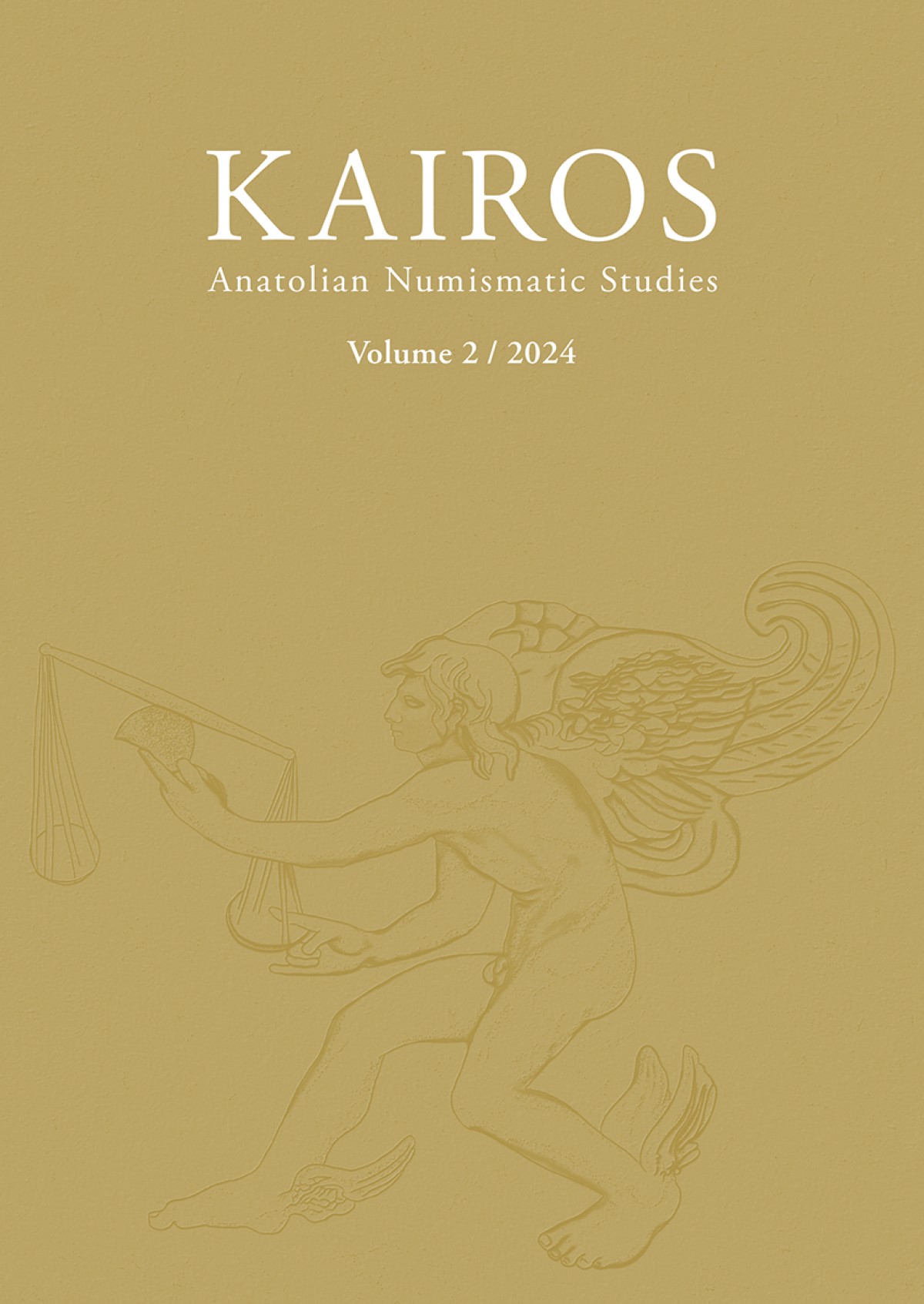
Kairos. Anatolian Numismatic Studies 2/2024Istanbul 2024ISSN 3023-7068IV + 143 S./pp., zahlr. S/W-Abb. / num. b/w-figs., 27,5 x 19,5 cm; broschiert / softcover
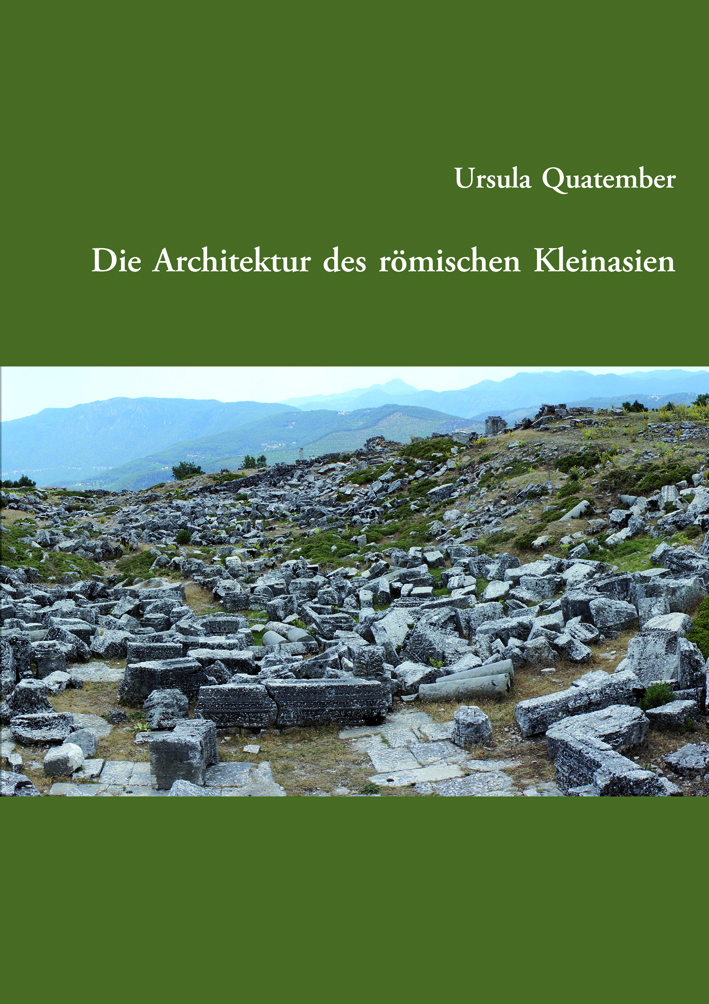
Ursula Quatember,Die Architektur des römischen Kleinasien(Veröffentlichungen des Instituts für Antike der Karl-Franzens-Universität Graz 19)Wien 2024ISBN 978-3-85161-312-4288 S./pp., 149 Taf. mit zahlreichen Farb- und S/W-Abb. / 149 pls. with num. colour and b/w-figs., 29,7 x 21 cm; kartoniert/hardcover
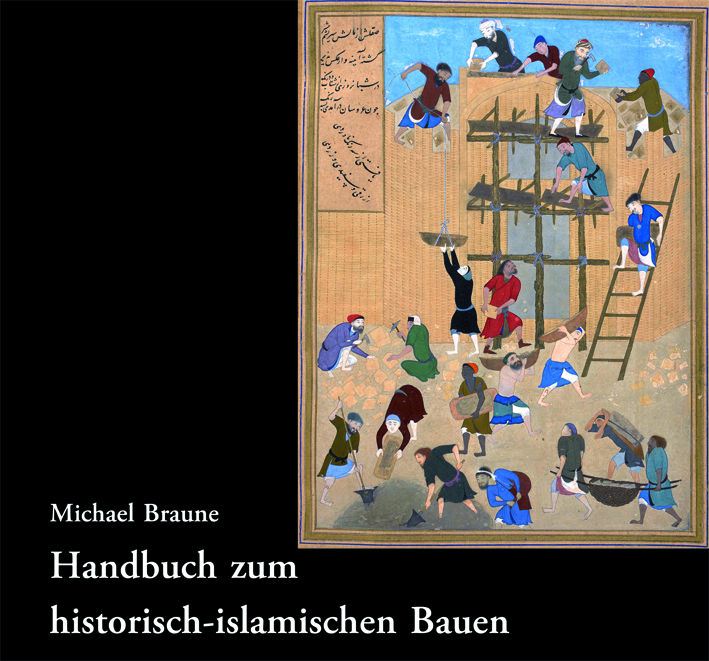
Michael Braune, Handbuch zum historisch-islamischen Bauen(Textrevision von Andrea Becker)Wien 2024ISBN 978-3-85161-315-5712 S./pp., zahlr. S/W-Abb./num. b/w-figs., 22,5 x 24 cm; kartoniert/hardcoverDas vorliegende Handbuch zum historisch-islamischen Bauen behandelt die Zeit von den Anfängen des Islam im 7. Jahrhundert bis zum Ende des Osmanischen Reiches im frühen 20. Jahrhundert. In mehr als 280, teils sehr ausführlichen Stichworten werden die typischen Bauformen in den klassisch islamischen Regionen erklärt, also bspw. die Moschee mit ihren Prinzipalstücken wie dem Mihrab, dem Minbar oder der Dikka, natürlich die Minarette, aber auch Madrasas, Krankenhäuser, Wohnbauten oder Trinkbrunnen, Befestigungen, Uhrentürme und Anlagen zur Wasserversorgung. Das Schwergewicht liegt jedoch auf der Baukonstruktion, z. B. der verschiedenen Kuppeln, der unterschiedlichen Gewölbe oder den zahlreichen Bogenformen, ebenso der Herstellung von Muqarnas oder Stuck. Auch die Baumaterialien spielen eine zentrale Rolle, wie die Fertigung von Mauerwerk aus Naturstein, Backstein, Lehm oder die Herstellung und der Gebrauch der Bindemittel Gips, Kalk und Bitumen, aber auch die Wiederverwendung von Baumaterial. Ebenfalls thematisiert sind der Materialtransport, die Bauhandwerker und ihre Werkzeuge sowie Bauvorschriften und Bauzeiten. 1.400 meist historische Photographien und Zeichnungen, wenn auch kleinformatig, illustrieren den Text.
Lejla Demiri – Cornelia Römer (Hrsg.),Texts from the Early Islamic Period of Egypt. Muslims and Christians at their First EncounterArabic Papyri from the Erzherzog Rainer Collection, Austrian National Library, Vienna(Nilus 15)Wien 2009ISBN 978-3-85161-013-0XVIII + 53 + XIII S., zahlr. Farbabb. im Text, 24 x 17 cm; broschiertText: englisch / arabisch Nilus 15 ist der Begleitband zu einer Ausstellung, die sich den frühislamischen Papyri aus Ägypten aus dem Bestand der Erzherzog Rainer Sammlung der Österreichischen Nationalbibliothek widmete. Der vorliegende Katalog enthält 21 arabische Dokumente diverser Textgattungen: Protokolle, offizielle Dokumente betreffend Steuern und Verwaltung, Rechtstexte, literarische Texte, Privatbriefe und Texte alltäglichen Inhalts. Diese Zeugnisse liefern uns aus erster Hand unschätzbare Informationen über die ersten Jahrhunderte der islamischen Periode und tragen u. a. wesentlich zur Kenntnis der soziopolitischen, ökonomischen und administrativen Geschichte, der Wissenschaft und Alltagskultur bei. Zudem dienen sie uns als Quelle für die frühen, auf diversen Ebenen stattfindenden Beziehungen zwischen Muslimen und Christen, wofür die vorliegenden Dokumente als Beispiele dienen.

Asuman Günal Türkmenoğlu u.a. (Hrsg.), I. ODTÜ Arkeometri Çalıştayı. Türkiye Arkeolojisi'nde Seramik ve Arkeometrik Çalışmalar. Prof. Dr. Ufuk Esin Anısına 7-9 Mayıs 2009 Ankara 2009 ISBN 978-975-94919-1-8 143 S., Farb- und S/W-Abb., 29,7 x 21 cm; broschiert (Artikel in türkisch) Inhaltsverzeichnis

Mohammad-Ali Jalaj Yaghan,The Islamic Architectural Element "Muqarnas".Definition, Geometrical Analysis and a Computer Generation System Wien 2001 ISBN 978-3-901232-24-4 152 S., 79 Abb., 24 x 21 cm, broschiert;CD-ROM mit Zeichnungen und Programmen in AutoLISP® beigelegt Zusammenfassung: This thesis is an attempt to analyze the muqarnas phenomenon, establishing it as a distinct field; and to design a computer algorithm for muqarnas generation system. It is divided into two parts as such.The first part starts with a review of the terms used to describe muqarnas along with the etymology of the word. It presents a new comprehensive definition for muqarnas (that is both inclusive and generic), and discusses its origin (formally, geographically, and chronologically).It categorizes the values of the muqarnas criterion either as characteristics (constant values for all muqarnas forms) or attributes (values that vary according to the type). Their different aspects are identified, defined, and extensively analyzed. This concept of characteristics and attributes constitutes the tools for further typological studies, which are suggested as the means to arrive at the final evolution map of muqarnas.The first part ends with a five-step model for the muqarnas design process.The second part recognizes the needs for a muqarnas computer generation system, discusses its module design in relation to the design process, and suggests the data structure for any muqarnas form in correspondence to the issues analyzed in the first part. Sample programs are written as tests for the algorithm. The second part ends by suggesting new contemporary steps in the evolution of muqarnas forms.All issues discussed in this thesis are the result of an original work conducted by the author unless specified otherwise.M. A. Yaghan
Erich Lehner,Südsee-ArchitekturTraditionelle Bautypen auf Hawaii, Tonga, Samoa, Neuseeland und den Fidschi-Inseln Wien 1995 ISBN 978-3-901232-12-1 112 S., 95 S/W-Abb. im Text, 21 x 15 cm, broschiert Beschreibung: Mit dem Begriff ´Südsee´ verbindet sich noch immer die Vorstellung von einer exotischen Kultur im tropischen Inselparadies des Pazifischen Ozeans, fernab und unberührt von der ´zivilisierten´ Welt. Diese Publikation versucht erstmals, die Bautypen eines größeren Gebietes Ozenaniens im Zusammenhang zu sehen. Es handelt sich um die Inselgruppen an der Westflanke des ´Polynesischen Dreiecks´: Tonga und Samoa als die am frühesten besiedelten Gebiete Polynesiens, Hawaii und Neuseeland, erst am Ende der polynesischen Völkerwanderung besiedelt, und das melanesische Fidschi, dessen Kultur weitgehend von Polynesien beeinflußt wurde. Vor dem Hintergrund der spezifischen Umweltbedingungen und gesellschaftlichen Zusammenhänge wird die Entwicklung der Architektur auf diesen Inselgruppen im komplexen Zusammenhang von Form, Funktion, Konstruktion und Symbolik betrachtet.

Karl R. Krierer,Sieg und NiederlageUntersuchungen physiognomischer und mimischer Phänomene in Kampfdarstellungen der römischen Plastik (Wiener Forschungen zur Archäologie 1) Wien 1995 ISBN 978-3-901232-02-2 448 S., 510 S/W-Abb. auf 160 Taf., 29,7 x 21 cm; kartoniertBeschreibung: Thema des Buches sind die vielfältigen Erscheinungsformen von Mimik und Gebärde in Kampfdarstellungen der römischen Skulptur. Im Zentrum der Untersuchungen stehen die Denkmäler der kaiserzeitlichen Triumphalikonographie. Hauptaugenmerk gilt den Barbarenbildnissen, für deren Charakterisierung oft stark expressive Stilmittel eingesetzt wurden. Der Verfasser versucht, in einer weit ausholenden Schau unter Einbeziehung der zahlreichen Phänomene von Physiognomie und Mimik in der Antike die Bedeutung dieses Bereichs zu erklären. Eine Fülle von in deutscher Übersetzung gebotenen literarischen Quellen ergänzt die anhand von über 500 Abbildungen diskutierten Objekte. Mehrere Indices erschließen dem Leser den Inhalt. Dieses Buch ist einerseits Beitrag zur Erforschung des antiken Menschenbildes, andererseits Spiegel des in den Denkmälern bezeugten Verhältnisses der römischen Macht gegenüber fremden Völkern. INHALTSVERZEICHNIS 1. Einleitung. Ein Prolegomenon zur Wissenschaftsgeschichte TEIL I 2. Ein Prolegomenon zur Thematik von Mimik und Physiognomie in der Antike Zur „Mimik der positiven Lebensäußerung” Mimik in Werken aus einzelnen „Kunstlandschaften” „Blickkontakt und Blickbezogenheit” Das Verstellen des Gesichtsausdrucks Das Verdecken des Gesichtes 2.1. Überblick der Themenkreise römischer Plastik mit Mimik 2.1.1. Themen des Mythos 2.1.1.1. Das Schicksal der Niobiden 2.1.1.2. Amazonen 2.1.1.3. Kentauren, Giganten 2.1.1.4. Iliupersis 2.1.1.5. Totenklage und Trauerszenen: Protesilaos und Laodameia, Meleager, Alkestis 2.1.1.6. Darstellungen Schlafender: Endymion, Eroten 2.1.1.7 Mimik in Darstellungen von Morden im Mythos: Medea-Sage, Orestie 2.1.1.8. Mimik bei Gefolterten: Marsyas, Polyphem und die klassischen Büßergestalten Sisyphus, Tantalus und Ixion 2.1.2. Jagdsarkophage 2.1.3. Zu Göttern und Heroen Herakles 2.1.4. Verschiedene inhaltliche bzw. personelle Bereiche mit Mimik 2.1.4.1. Darstellungen von Kindern 2.1.4.2. Tanz, Musik, Theater 2.1.4.3. Sport, Agone 2.1.4.4. Personen des philosophischen Wirkungsbereiches: Dichter, Denker, Redner 2.1.4.5. Das Altersbildnis 2.1.4.6. Ein Exkurs zum Porträt 2.1.4.7 Porträtbilder einiger römischer Kaiser 2.1.4.8. Die schwere Arbeit verrichtenden Personen 2.1.4.9. Die Personengruppe der Sozialen Außenseiter 2.1.4.10. Darstellungen von Angehörigen fremder Ethnien Teil II Vorbemerkungen zu den Schlachtdarstellungen 3. Physiognomie und Mimik im Zusammenhang mit Schlachtdarstellungen 3.1. Mimik in Darstellungen auf Schlachtsarkophagen Der Schlachtsarkophag Ammendola Der Feldherrnsarkophag Mattei Der Sarkophag Konservatorenpalast 2141 Der Schlachtsarkophag von der Via Tiburtina Der Kleine Schlachtsarkophag Ludovisi Der Schlachtsarkophag Giustiniani Der Schlachtsarkophag Villa Doria Pamphilj I Der Schlachtsarkophag von Portonaccio Das Sarkophagrelief Villa Doria Pamphilj II Der Schlachtsarkophag Borghese Der Große Schlachtsarkophag Ludovisi 3.2. Mimik in Kampf- und Schlachtdarstellungen auf Reliefs 3.2.1. Das ephesische Parthermonument in Wien 3.2.2. Mimik bei Barbaren in der provinzialrömischen Reliefplastik 3.3. Mimik in Schlachtdarstellungen statuarischer Art 3.3.1. Mimik bei Statuen im Zusammenhang mit Schlachtdarstellungen 3.3.2. Mimik bei Statuetten im Zusammenhang mit Schlachtdarstellungen 4. Physiognomie und Mimik auf Triumphdenkmälern 4.1. Die römischen Triumphsäulen Vorbemerkungen 4.1.1. Die Reliefs der Trajanssäule 4.1.2. Die Reliefs der Mark Aurel-Säule 4.1.2.1. Mimik der Barbarinnen auf der Mark Aurel-Säule 4.1.2.2. Exkurs: Der Ansatz eines Versuchs über philosophische Voraussetzungen von Verhaltensweisen im Zusammenhang mit dem „Gemüt” 4.1.2.3. Darstellung von Kaiser Mark Aurel. Ein Fragment zu seiner Persönlichkeit und Philosophie unter Bezugnahme auf die Mark Aurel-Säule 4.1.2.4. Die Galliergruppe Ludovisi. Ein retrospektiver Exkurs 4.2. Physiognomie und Mimik auf römischen Triumphbögen 4.2.1. Der Große Trajanische Schlachtfries vom Konstantinsbogen 4.2.2. Die aurelischen Reliefs vom Konstantinsbogen 4.2.3. Die Reliefs vom Bogen des Septimius Severus 4.2.4. Der Galeriusbogen von Thessaloniki 4.3. Der sog. Galaterfries aus Ephesos in Wien 5. Physiognomie und Mimik von Barbaren in Gefangenschaft 5.1. Mimik von Barbaren in Gefangenschaft auf Sarkophagen 5.2. Mimik von Barbaren in Gefangenschaft auf Reliefs 5.3. Mimik von Barbaren in Gefangenschaft: statuarische Darstellungen, Dakerbildnisse 5.4. Mimik von Barbaren in Gefangenschaft: Statuetten 6. Mimik trauernder Barbarinnen 6.1. Statuen 6.2. Reliefs 7. Physiognomie und Mimik von Barbaren in Unterwerfungsszenen 7.1. Sarkophage Der Feldherrnsarkophag Belvedere Der Feldherrnsarkophag in Mantua Der Feldherrnsarkophag von der Villa Taverna in Frascati 7.2. Statuarische Darstellungen 7.3. Statuetten

Martin Kubelík – Mario Schwarz (Hrsg.),Von der Bauforschung zur Denkmalpflege.Festschrift für Alois Machatschek zum 65. Geburtstag Wien 1993 ISBN 978-3-901232-03-9 292 S., zahlr. S/W- Abb., 29,7 x 21 cm; kartoniert
Mustafa Sayar - Peter Siewert - Hans Taeuber : Inschriften aus Hierapolis-Kastabala. Bericht über eine Reise nach Ost-Kilikien, mit einem Beitrag von James Russel Österreichische Akademie der Wissenschaften, Phil.-Hist. Kl., Sitzungsberichte, 547. BandWien 1989 40 S. + 20 Taf. mit SW-Abb., 24 x 15 cm; broschiert